Top alternatives to Scrunch are AI visibility trackers, with the best choice determined by covered engines, plan caps and the need to report AI-search pipeline. Prices listed range from $29 to $699 monthly, according to May and September 2026 listings, while cheaper starting tiers frequently cover fewer engines. Sona AI Visibility connects citations and prompts with pipeline and revenue, whereas most trackers only track mentions. Scrunch Core is listed at $250 monthly with annual billing.
What sends teams looking for alternatives to Scrunch AI?
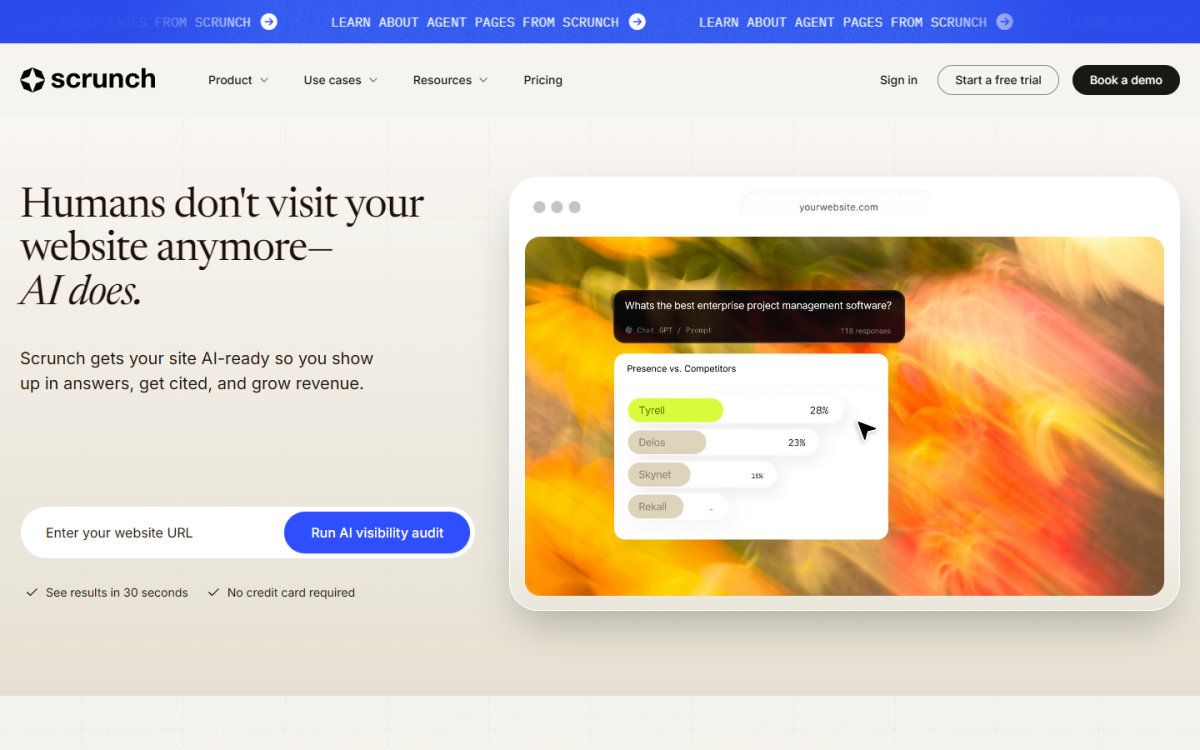
Teams seek Scrunch alternatives when Scrunch AI’s pricing, engine coverage, or reporting model does not match their budget and measurement requirements. Scrunch AI monitors brand appearance in AI search results, while some buyers need different engine coverage, prompt capacity, or attribution depth.
- Entry price. Scrunch AI starts from $250 per month, with no published annual discount, as of October 2026.
- Core limits. Scrunch Core is listed at US$250 for one country, four engines, and five competitors, per the October 2026 listing.
- Price spread. Alternatives are listed from $29 per month to $499 per month, per the May and September 2026 listings, creating options across different budgets.
- Pipeline reporting. Teams that must report pipeline from AI search need attribution. Monitoring tools show how a brand appears in AI answers, while attribution measures subsequent commercial activity.
Price is only the first filter. Teams also need to establish which answer engines matter, how many prompts they can track each day, and whether reporting connects visibility with commercial outcomes.
How were these alternatives to Scrunch AI chosen and reviewed?
These alternatives to Scrunch AI were selected because each addresses AI visibility monitoring, AI search measurement, or a related buyer requirement. The shortlist includes products with enough public information to verify at least one material buying field, such as price, engine coverage, prompt capacity, agency support, or product positioning.
Public pricing and product listings were read between May and October 2026. Sona AI Visibility is described from Sona’s product description. None of the third-party products in this article were hands-on tested, so this article does not validate their interfaces, data quality, or implementation processes.
- Price. Monthly, annual, and quote-based billing terms were kept distinct.
- Coverage. Engine counts and named answer engines were recorded when publicly available.
- Capacity. Entry-plan prompt, domain, country, topic, or credit limits were noted where published.
- Execution depth. The review distinguishes visibility monitoring from attribution, workflow, and measurement functions.
Sona publishes this comparison and sells one of the products discussed. Many comparison pages publish feature tables without disclosing prompt sets, sample sizes, scoring rules, prompt selection methods, sampling frequency, or citation definitions. Those details were not verifiable from several public listings, so this article does not infer them. ZipTie’s public pricing and trial terms were verified, while preset prompt quantities and engine counts were not published.
How do leading alternatives compare on price, engines and focus?
Entry price alone does not determine fit. Buyers should compare named engines, daily prompt capacity, agency support, and whether a product is designed for AI visibility reporting or revenue measurement. Scrunch AI starts from $250 per month, with no published annual discount, as of October 2026.
| Tool | Starting price | Agency Plans? (Yes/No) | # of Answer Engines Tracked | Answer Engines | # of Daily Tracked Prompts (entry plan) | Cost per Daily Tracked Prompt | Differentiation |
|---|---|---|---|---|---|---|---|
| Sona AI Visibility | From $75/month, billed annually, as of October 2026 | Yes | 3 | Not published | 5,000 credits/month, about 56 daily tracked prompts across three engines | $0.45 per daily tracked prompt | Connects AI citations and prompts to pipeline and revenue on one account timeline, while tracking AI crawler activity from server logs or a lightweight edge worker without a JavaScript tag. |
| Scrunch AI | From $250/month, monthly, as of October 2026 | Yes | 4 | ChatGPT, Perplexity, Google AI Overviews, Microsoft Copilot | 125 prompts, frequency not stated | No refresh cadence published | AI visibility monitoring across four Core engines, with crawler and bot traffic monitoring, shopping visibility, and dashboard customization. |
| Peec AI | From $95/month, monthly, as of October 2026 | Yes | 3 | Not published | 50 prompts daily | $0.63 per daily tracked prompt | Focused AI visibility tracking across selected answer engines. |
| Profound | Custom pricing for brands, as of October 2026 | Yes | 9 | ChatGPT, Perplexity, Google AI Mode, Gemini, Microsoft Copilot, DeepSeek, Claude, Google AI Overviews, Exa Search | Custom prompt plan, daily | Cannot calculate from custom pricing | Enterprise-oriented AI visibility and reputation monitoring. |
| Otterly.ai | From $29/month, monthly, as of October 2026 | Yes | 4 | ChatGPT, Google AI Overviews, Perplexity, Microsoft Copilot | 15 prompts daily | $0.48 per daily tracked prompt | Low-cost AI search monitoring across four core answer engines. |
| AthenaHQ | Free Essential plan, Starter from $295/month, as of October 2026 | Not published | 5 | ChatGPT, Perplexity, Google AI Overviews, Gemini, Microsoft Copilot | 300 credits/month on Essential | No refresh cadence published | AI visibility monitoring with a free entry plan and larger model coverage on paid tiers. |
| PromptWatch | From $95/month, monthly, as of October 2026 | Yes | Not published | All supported models | 50 prompts and 6,000 responses/month | $0.48 per daily tracked prompt | Prompt and response monitoring across all supported models on every plan. |
| Goodie | From $295/month, billing period not stated, as of October 2026 | Yes | 5 | Not published | 110 prompts daily | $0.67 per daily tracked prompt | Model coverage and daily prompt monitoring for AI visibility programs. |
Engine counts are not interchangeable. A team running the same prompt list daily can identify changes that a weekly snapshot may obscure, because retrieval indexes, model updates, and competitor publishing can alter answers day to day.
Which alternatives suit different types of buyer?
These eight alternatives are ordered by buyer need, not from best to worst. The right choice depends on whether a team needs attribution, a broad SEO suite, a low-cost monitoring plan, enterprise controls, or a dedicated AI search tracker.
Sona AI Visibility: which platform suits teams that need AI visibility tied to revenue?
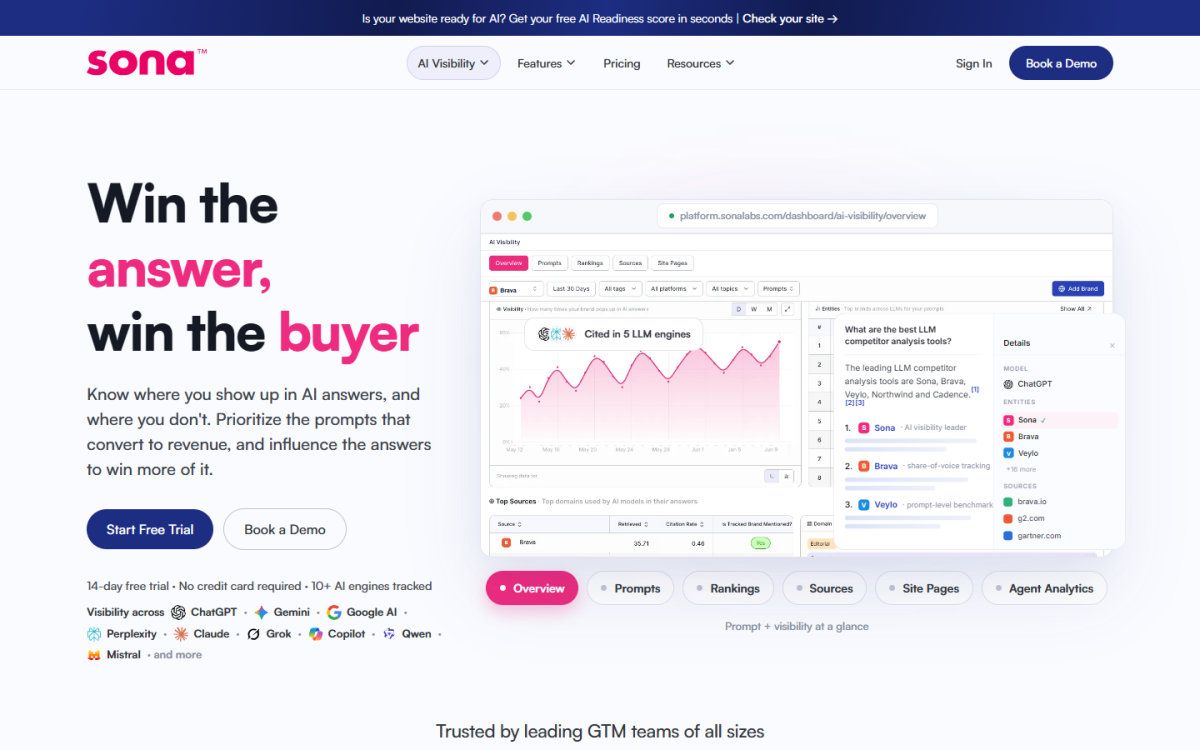
Sona AI Visibility connects AI citations and prompts to pipeline and revenue, with AI crawler and agent activity at the front of that measurement path. Mention and competitor tracking provide the baseline. The product serves marketing leaders who need to explain whether AI search contributes to accounts, opportunities, and closed-won revenue.
Sona AI Visibility starts from $75 per month billed annually, as of October 2026. Unlike Scrunch AI’s Core monitoring plan, Sona AI Visibility is designed to connect visibility data with commercial outcomes. Setup uses server logs or a lightweight edge worker, with no JavaScript tag, supporting a path from crawler activity to AI-referred visits and commercial outcomes.
Semrush: which option suits teams already using a broad SEO suite?
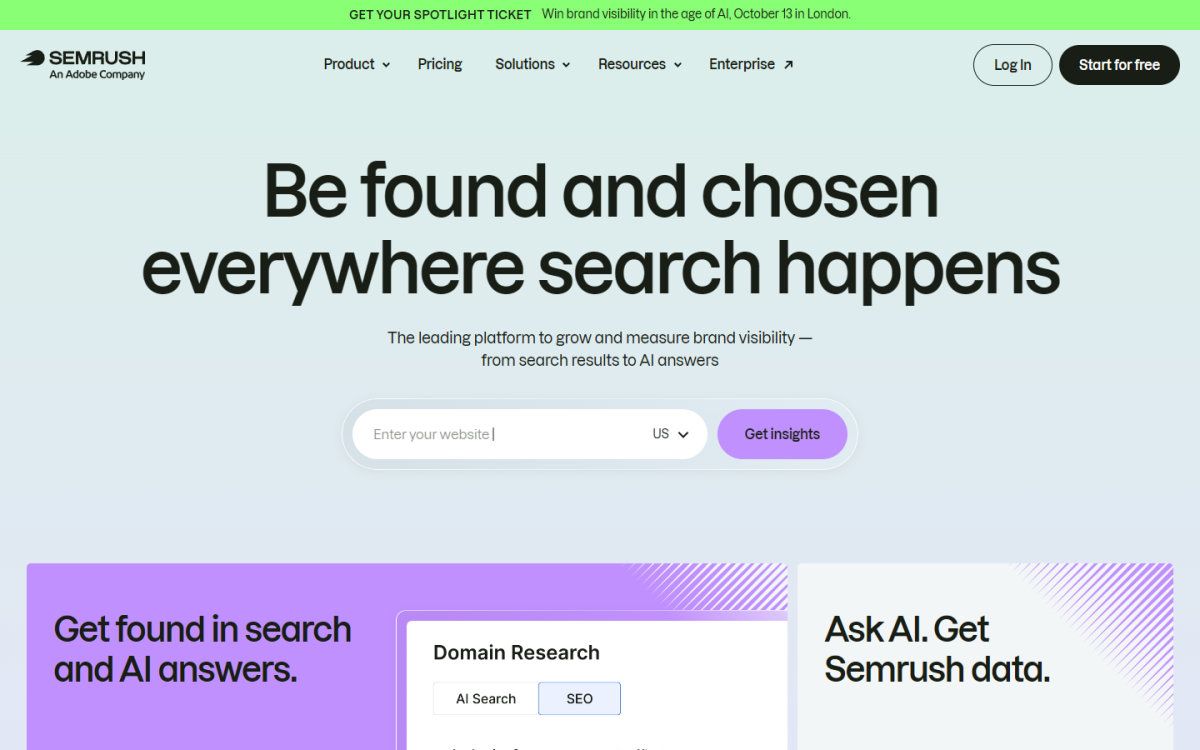
Semrush offers an AI Visibility Toolkit for teams already working inside an SEO suite that want AI answer monitoring beside established search workflows. The base plan tracks 25 custom prompts daily across four engines: ChatGPT, Google AI, Gemini, and Perplexity.
Semrush AI Visibility starts at $99 per month per domain, as of October 2026. Compared with Scrunch AI, Semrush places AI visibility within a wider SEO operating model and starts at a lower published price. Adoption requires defining a prompt list, assigning domains, and choosing daily, weekly, or monthly reporting updates.
Ahrefs Brand Radar: which option suits teams that want search-backed prompt research?
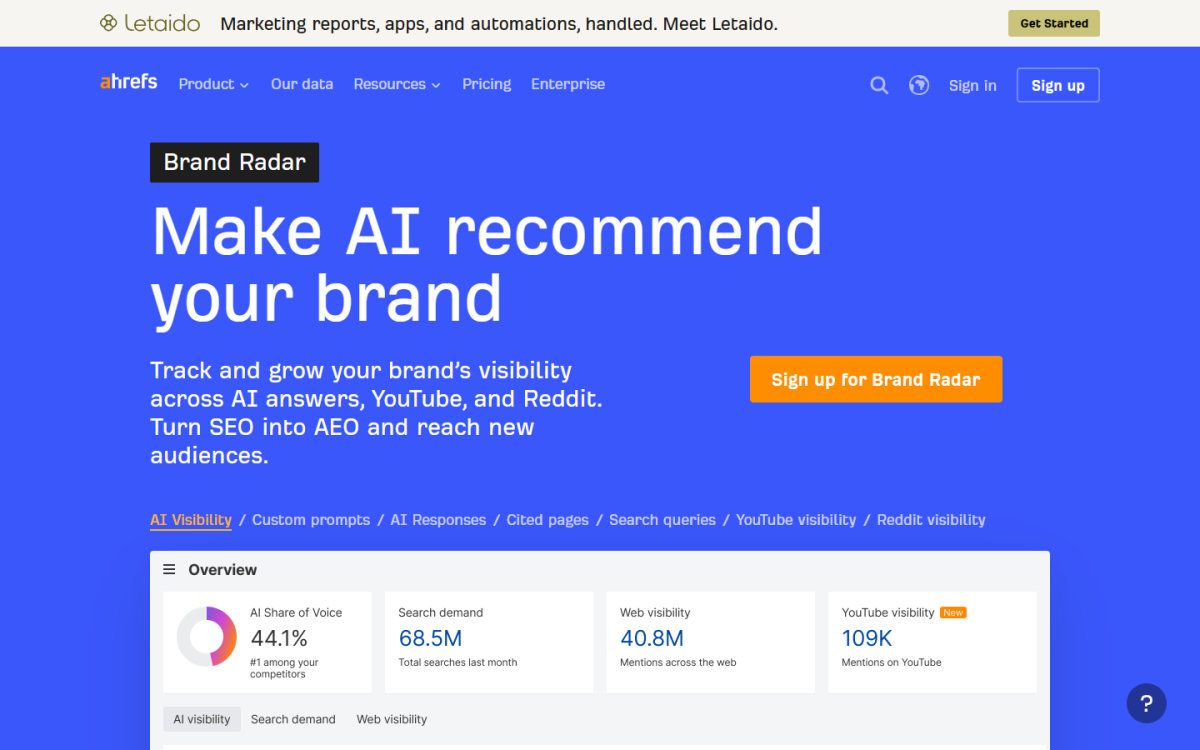
Ahrefs Brand Radar suits teams that value search-backed research and want to investigate how brands appear across AI answer surfaces. Its pricing separates Brand Radar tiers from standalone Brand Radar AI access, making package selection a material buying decision.
Ahrefs Brand Radar starts from $129 per month for Lite, while standalone Brand Radar AI starts from $199 per month, as of October 2026. Unlike Scrunch AI’s published four-engine Core plan, Ahrefs does not publish AI engine names or prompt frequency by Brand Radar tier. Adoption requires selecting the relevant package and defining the brand, topic, and competitor coverage required for reporting.
Otterly.ai: which option suits budget-constrained teams testing AI visibility?
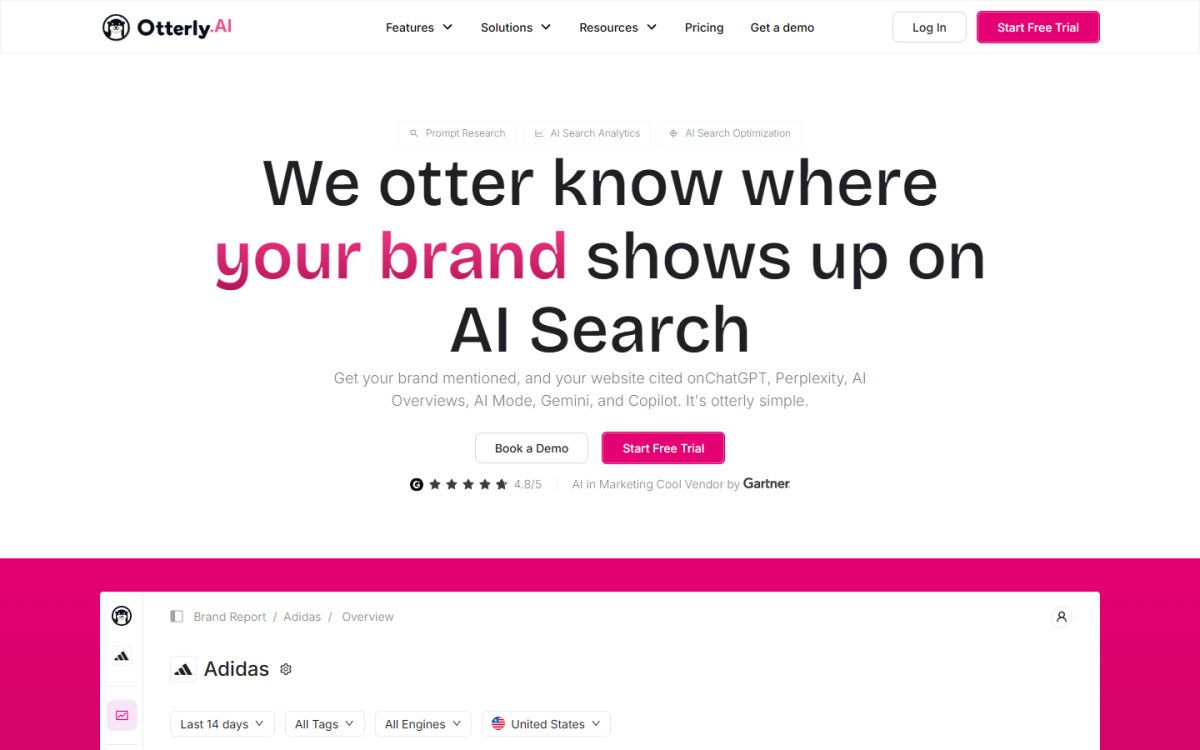
Otterly.ai is aimed at teams that need an accessible entry point for monitoring appearance in AI search results. Its Lite plan covers ChatGPT, Google AI Overviews, Perplexity, and Microsoft Copilot.
Otterly.ai starts at $29 per month, as of October 2026. Compared with Scrunch AI’s $250 per month Core starting price, Otterly.ai offers a lower-priced plan with 15 daily prompts across four core engines. Adoption requires selecting the prompt set and confirming that 15 daily prompts cover buyer questions.
Peec AI: which option suits mid-market teams that want a focused tracker?
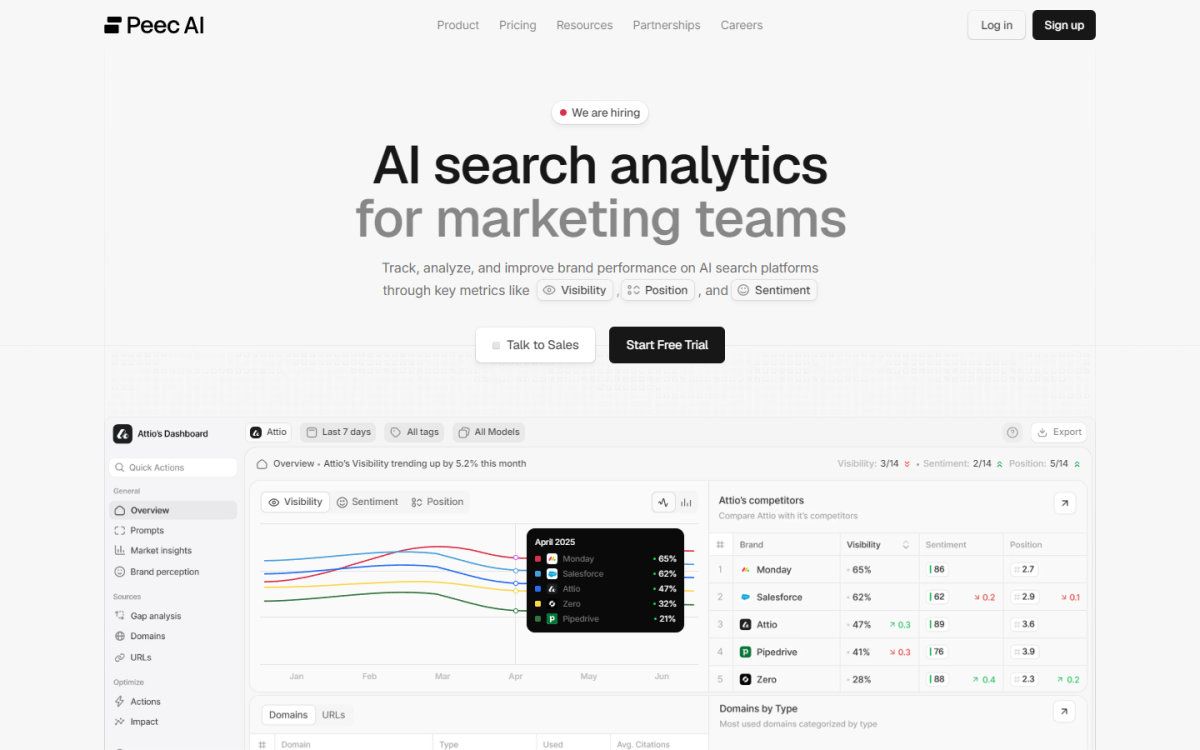
Peec AI is a focused AI visibility tracker for teams that want prompt monitoring across selected answer engines. Its Starter plan has three active engines, while six engines are listed for self-serve plans.
Peec AI starts from $95 per month, with 15% off annual billing, as of October 2026. Compared with Scrunch AI’s four-engine Core plan, Peec AI Starter has three active engines and 50 daily prompts. Adoption requires selecting active engines, importing or creating a prompt set, and matching the prompt allowance to reporting scope.
Profound: which option suits enterprise teams with compliance requirements?
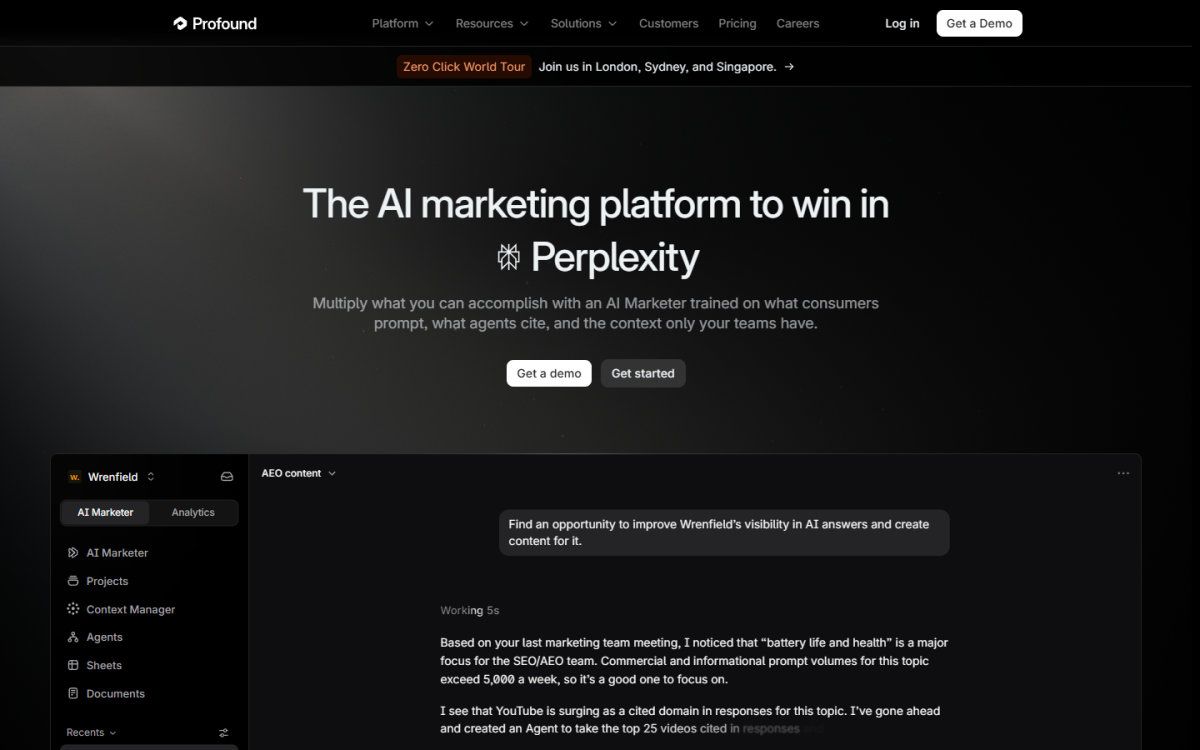
Profound is positioned for enterprise compliance requirements, including SOC 2 and HIPAA, and for corporate reputation work. Its free Trial covers three engines: ChatGPT, Gemini, and Google AI Overviews.
Profound uses custom pricing for brand Enterprise plans, as of October 2026. Compared with Scrunch AI’s published Core price and four-engine scope, Profound’s brand offering requires an enterprise scope discussion, while agency plans start from $99 per month. Adoption requires confirming model coverage, workspace structure, and governance requirements before migrating an existing prompt library.
AthenaHQ: which option suits growth teams that want a free starting point?
AthenaHQ provides a free Essential plan for teams that want to establish an AI visibility workflow before committing to a paid tier. Essential covers ChatGPT, Perplexity, Google AI Overviews, Gemini, and Microsoft Copilot.
AthenaHQ has a free plan, while Starter starts from $295 per month, as of October 2026. Unlike Scrunch AI, AthenaHQ provides a free Essential entry point, while Starter includes 11 models and unlimited prompts. Adoption requires setting monitored prompts and determining whether the free credit allowance or paid plan supports the required response volume.
ZipTie: which option suits teams shortlisting dedicated AI search trackers?
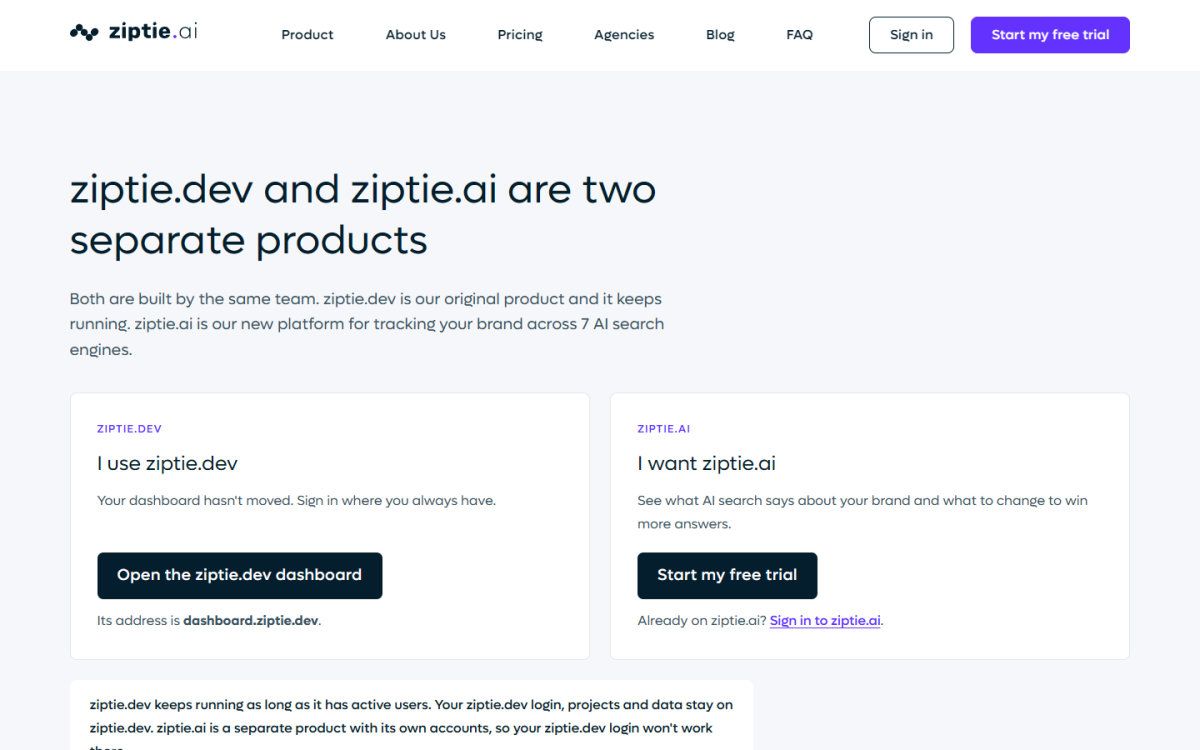
ZipTie is an AI search visibility tracker for teams shortlisting a dedicated monitoring product. Its Starter preset starts from $42.75 per month, with seven engines selectable on every plan.
ZipTie offers a 7-day trial without a card and includes 25 daily prompts across ChatGPT, Google AI Overviews, and Microsoft Copilot during that trial, as of October 2026. Compared with Scrunch AI, ZipTie uses selectable engines and prompt pools rather than publishing preset prompt quantities for paid plans. Evaluation should begin with a written prompt inventory and a list of required answer engines.
Why can a low entry price mislead when comparing alternatives?
A low entry price can mislead because the advertised tier may cover fewer engines, prompts, countries, or answer surfaces than a buyer needs. Compare the first tier that tracks the required engines and prompt volume, rather than the cheapest advertised plan.
Otterly.ai starts at $29 per month on four core engines, as of October 2026. Profound uses custom pricing for brand Enterprise plans, while its free Trial covers three engines for seven days, as of October 2026. Ahrefs Brand Radar starts from $129 per month for Lite, while standalone Brand Radar AI starts from $199 per month, as of October 2026.
Peec AI starts from $95 monthly with 15% off annual billing, as of October 2026. Semrush AI Visibility starts from $99 per month per domain with 25 daily prompts, as of October 2026. AthenaHQ has a free plan and a Starter tier from $295 per month, as of October 2026.
Affordable alternatives are listed from US$49 per month with free trial options, per the October 2026 listing, while another October 2026 listing places the floor at US$33 per month. The floors differ because they cover different tool sets. Scrunch Core starts from $250 per month for one country, four engines, and five competitors, as of October 2026.
Which AI engines do these alternatives actually track?
Engine counts matter only when product coverage is explicit. Scrunch AI tracks ChatGPT, Perplexity, Gemini, Claude, Grok, and Google AI Overviews, per the October 2026 listing, while its Core plan tracks ChatGPT, Perplexity, Google AI Overviews, and Microsoft Copilot.
Otterly.ai covers four core engines on its Lite plan, as of October 2026. Peec AI Starter has three active engines, although the Starter engine names are not published. Profound’s free Trial covers ChatGPT, Gemini, and Google AI Overviews, while Enterprise supports up to nine named engines, as of October 2026. Ahrefs Brand Radar does not publish AI engine names by tier.
Sona’s own AI visibility data, September 2026, covers eight answer surfaces: ChatGPT, Google AI Overviews, Perplexity, Google AI Mode, Gemini, Mistral, Qwen, and Claude. That archive count describes measurement coverage, not whether all plans from every vendor monitor the same answers.
Buyers should ask each vendor how many prompts are tracked, how often answers are sampled, and how citations are defined. Public listings did not consistently verify prompt selection, sample size, refresh frequency, or citation methodology. A daily prompt log provides a comparable series for identifying sustained movement.
Which alternatives connect AI visibility to pipeline and revenue?
Most AI visibility trackers report mentions, citations, positions, or share of voice. Those metrics establish whether a brand appears in AI-generated content, but they do not identify which accounts visited, progressed, or created revenue.
Sona AI Visibility and Sona Marketing Measurement connect prompts and citations to pipeline and revenue, with AI crawler and agent activity at the front of that path. AI Attribution connects AI-referred activity to accounts, pipeline, and closed-won revenue on one account timeline, while Agent Analytics records crawler activity from server logs or a lightweight edge worker.
For teams that need activation as well as reporting, Sona can resolve anonymous accounts and contacts behind AI-referred visits through cookieless identification, infer the likely prompt behind an AI-referred visit, and apply intent scoring. The resulting audiences can support Slack alerts, CRM sync, and live ad audiences.
What does Scrunch AI still do well?
Scrunch AI serves teams that want coverage across ChatGPT, Perplexity, Gemini, Claude, Grok, and Google AI Overviews in one monitoring environment. Community discussion on Reddit also identifies crawler and bot traffic monitoring, shopping and product visibility, and dashboard customization as Scrunch strengths.
Scrunch AI may suit a team that needs those six engines, shopping visibility, bot-traffic monitoring, and dashboard customization in one place, and can accept the $250 per month reference price with no published annual discount, as of October 2026.
Monitoring which AI answers mention a brand is only part of the measurement task. Sona AI Visibility connects citations and AI-referred visits to accounts, pipeline, and revenue.
Frequently Asked Questions
What is the cheapest alternative?
Otterly.ai starts from $29 per month on four core engines, as of October 2026. The entry plan includes 15 daily prompts, so its limits matter more than the headline price. Other listings place affordable alternatives from US$33 and US$49 per month, per October 2026 listings. Those floors differ because they cover different tool sets.
How much does Scrunch AI cost compared with alternatives?
Scrunch AI starts from $250 per month, with no published annual discount, as of October 2026. Scrunch Core covers one country, four engines, and five competitors, per the October 2026 listing. Alternatives range from $29 to $499 per month depending on the tool, engine coverage, prompt capacity, and billing term.
Do any alternatives have a free plan or trial?
AthenaHQ lists a free plan with a Starter tier from $295 per month, as of October 2026. An October 2026 listing also notes free trials among affordable alternatives. Trial availability, included credits, card requirements, and renewal terms change, so buyers should confirm current terms on each vendor’s product page.
Which alternatives track more than ChatGPT?
Otterly.ai covers four core engines on its Lite plan, as of October 2026. Peec AI Starter has three active engines, although the engine names are not published. Profound’s free Trial covers ChatGPT, Gemini, and Google AI Overviews, as of October 2026. Check the specific products included, rather than engine count alone.
Can an alternative show pipeline from AI search?
Most trackers report mentions, citations, and share of voice. Sona AI Visibility ties citations and prompts to pipeline and revenue through AI Attribution and Agent Analytics, allowing teams to treat AI search as a measurable acquisition channel rather than a standalone visibility report.
How reliable are comparison pages for AI visibility tools?
Comparison pages help with initial shortlisting, but many publish feature tables without disclosing prompt sets, sample sizes, scoring rules, refresh frequency, or citation definitions. Many are also published by vendors. This article states its public-listing review period, comparison criteria, and Sona’s commercial interest in the category.
Summarize this article with AI: ChatGPT · Claude · Perplexity · Google AI Mode
Last updated: October 2026